


Google has never explicitly penalized content for being AI-generated. What it does penalize is content that's unhelpful, repetitive, thin, or shown without any regard for the person reading it. The problem most sites run into when scaling with AI isn't the tool they're using - it's the process built around it.
Done right, AI-assisted content production helps you publish at volume without sacrificing quality, relevance, or authority. Done carelessly, it floods your site with pages that cannibalize each other, frustrate readers, and signal to search engines that your domain is more factory than resource.
This guide is for those who want to scale intelligently - it covers the practices that separate high-performing AI content operations from the ones that eventually get filtered into irrelevance, and what you can put in place to make sure that you're building in the right direction.
Short Summary
To scale AI content without penalties, focus on quality over quantity. Always have humans review and edit AI-generated drafts to ensure accuracy, originality, and value. Add unique insights, data, or expert perspectives that AI alone cannot provide. Avoid thin, repetitive content by targeting specific audience needs. Use AI as a research and drafting tool, not a final publisher. Follow Google's helpful content guidelines by prioritizing user intent over keyword stuffing. Maintain a consistent brand voice and fact-check everything before publishing.
What Google Actually Penalizes (And What It Doesn't)
AI content is not the problem. That distinction matters quite a bit because most of the fear around AI and SEO is built on a misunderstanding of what Google targets.
Ahrefs found that 86.5% of top-ranking pages have some AI-generated content, and the correlation between AI content percentage and ranking position is nearly zero - sitting at just 0.011. That is about as close to "no relationship" as data gets. Pages with heavy AI involvement rank just as well as pages written entirely by humans, and Google's systems are not filtering them out.
What Google does target is more specific. In early 2025, Google added "scaled content abuse" as a named spam category in its search documentation. In practice, that means making large volumes of content that exists primarily to rank in search instead of to help a person. The emphasis is on intent and quality - not on the tool used to write it.
AI content that answers a genuine question well is fine. AI content that floods a site with hundreds of thin, repetitive pages to capture keyword variations is what draws a penalty.
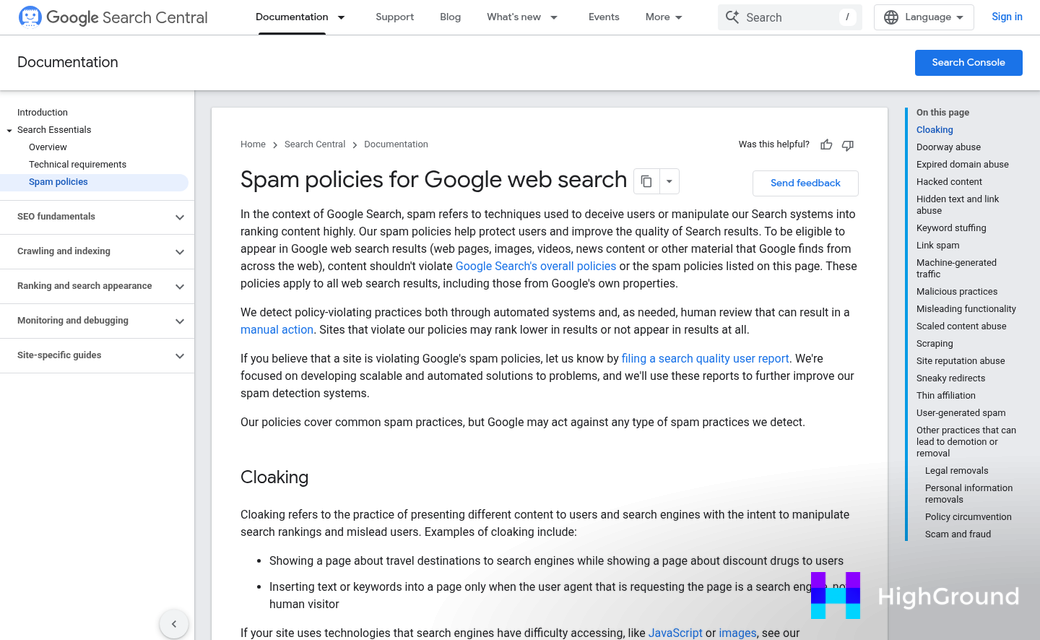
The line Google draws is between using AI to produce helpful content at scale and using AI to game search with content that adds no value. One is a workflow. The other falls under spam policy.
This also means the penalty danger is not about detection. Google has said it focuses on the quality and helpfulness of content instead of how it was made. A poorly written human post can get penalized for the same reasons a poorly written AI post can - it just does not help anyone.
The goal is not to hide AI involvement or to stay usage below some invisible threshold. You want to make sure every page you publish has a reason to be out there for the reader.
The Numbers Behind the March 2024 Penalty Wave
Google's March 2024 Core Update had a stated goal: cut back on low-quality, unoriginal content in search results by 45%; it's not a small trim - it was one of the most aggressive content-quality actions Google had taken in years.
The data that came out afterward painted a picture of who got hit. Originality.ai tracked 1,446 sites that received manual actions around that time. Every single one of the sites had AI-generated posts. Half of them had AI content making up 90 to 100 percent of their total output.
Many were deindexed entirely, and for most of them it happened within three to six months of publishing at scale. The speed of that's worth mentioning - it wasn't a slow fade.

What connected these sites wasn't that they used AI - it was that they used AI to generate giant volumes of content with no editorial layer on top. No added perspective, no fact-checking, no human judgment applied anywhere in the process. The posts were basically raw model output published directly to a live site.
This distinction matters more than most know. Google's systems are built to look at quality tells like depth, originality, and practicality to the reader. When a site publishes hundreds of near-identical AI posts in a short window, those tells collapse fast. There's nothing for Google to reward.
Volume alone wasn't the problem either. Sites publishing a high number of well-edited, helpful posts didn't see the same results. The penalty pattern tracked most closely with the combination of high volume and zero editorial effort - not with either factor on its own. Tools that reduce AI detection signals in WordPress posts exist precisely because that distinction has real consequences.
The March 2024 wave wasn't a signal that AI content is off the table - it was a signal that content with no human investment behind it is a actual line to draw, and the sites that crossed it mostly did so by treating AI as a replacement for editorial work instead of a tool to support it. Understanding how AI can update and improve existing posts rather than simply generate new ones at scale is part of what separates sustainable use from the kind that draws penalties.
The Difference Between Scaling AI Content and Spamming It
Volume alone is not what gets sites penalized. The sites that got wiped out in March 2024 were not punished for AI - they were punished for publishing content that had no editorial hand on it and no real purpose behind it.
The distinction comes down to whether the content actually helps the person who lands on it. A page that ranks for a keyword but never answers the underlying question is not scaled content - it's noise at scale.
Editorial oversight is the dividing line here. Sites that survived high-volume publishing had a human step in to fact-check, reframe thin sections, and make sure that the final piece reads like it was written for a person and not a crawler. That does not mean rewriting everything from scratch - it means having a review step before anything goes live.

Publishing pace also matters more than people account for. Pushing out hundreds of posts a week sends a signal that no actual review could have happened. A steady and manageable cadence is far less likely to draw scrutiny and far more likely to produce content worth keeping long term. Tools that let you auto queue and schedule posts can help you maintain that controlled pace without falling behind.
The table below highlights the key differences between the two strategies.
| Content Trait | Penalized Approach | Safe Scaled Approach |
|---|---|---|
| Editorial oversight | None or minimal | Human review on every piece |
| Publishing pace | Hundreds of posts per week | Manageable, consistent cadence |
| Content uniqueness | Templated, near-duplicate | Original angles, real insights |
| User intent match | Keyword stuffing, no real answer | Directly answers the search query |
Content uniqueness is worth mentioning in that list. Templated pages that swap out a city name or a product category are near-duplicates regardless of how they were generated. Google has become much better at detecting this pattern across a domain. Using bulk editing plugins to update and differentiate existing posts can help address this before it becomes a wider site-level issue.
How to Build an Editorial Layer Into Your AI Workflow
The difference between AI-assisted content and penalized content usually comes down to one thing: whether a human with judgment touched it before it went live. That means building a review into your process- not adding one at the end as an afterthought.
Start by assigning a dedicated reviewer to every content type you produce at scale- this doesn't have to be a senior editor for every piece. But it does need to be a person who can catch factual errors, flag thin reasoning, and add context the AI wouldn't have. Think of this role as a quality gate- not a light proofread.
Fact-checking is where scaled workflows fall apart. AI tools can generate plausible-sounding claims that are wrong or outdated, and no amount of writing will save you if the information is bad. Build a step where claims get verified against sources before anything gets published. Auto-adding citations with AI in WordPress can help anchor claims to real sources before content goes live.
Original commentary is another layer worth adding deliberately. When a human writer can add a pointed observation, an example, or a contrarian take, the content stops reading like it came off an assembly line. Even a short paragraph of genuine perspective can change how a piece lands for a reader.
It's helpful to define what "good enough to publish" actually means for your team in writing. If you don't have that standard, reviewers apply different thresholds and the quality can become inconsistent across a large volume of content. A short internal checklist works here. Tools that enforce post writing preferences can help keep output consistent before it even reaches a reviewer.
| Editorial Step | What to Check |
|---|---|
| Fact review | Are all claims accurate and sourced? |
| Human commentary | Does the piece include original perspective? |
| Quality gate | Does it meet the team's publish standard? |
Ask yourself: if Google pulled ten of your published pieces for a manual review tomorrow, would they hold up? That question is a helpful gut check for whether your editorial layer is doing work or just going through the motions.
Signals That Tell Search Engines Your Content Has Real Value
A Semrush study of over 20,000 articles and 700 marketers found that Google does not penalize content just because AI helped write it. What Google does penalize is content that fails to show value. That distinction matters quite a bit when you're scaling up production.
Consider what happens after someone lands on your page. Do they stay and read? Do they click through to related content? Do they find an answer that actually helps them? These behavior patterns - time on page, scroll depth, internal navigation - send signals back to search engines about whether your content is worth ranking.
Topical depth is one of the strongest signals you can build into a piece - this doesn't mean writing longer content for the sake of it - it means covering a topic thoroughly enough that a reader doesn't need to go elsewhere to get the full picture.
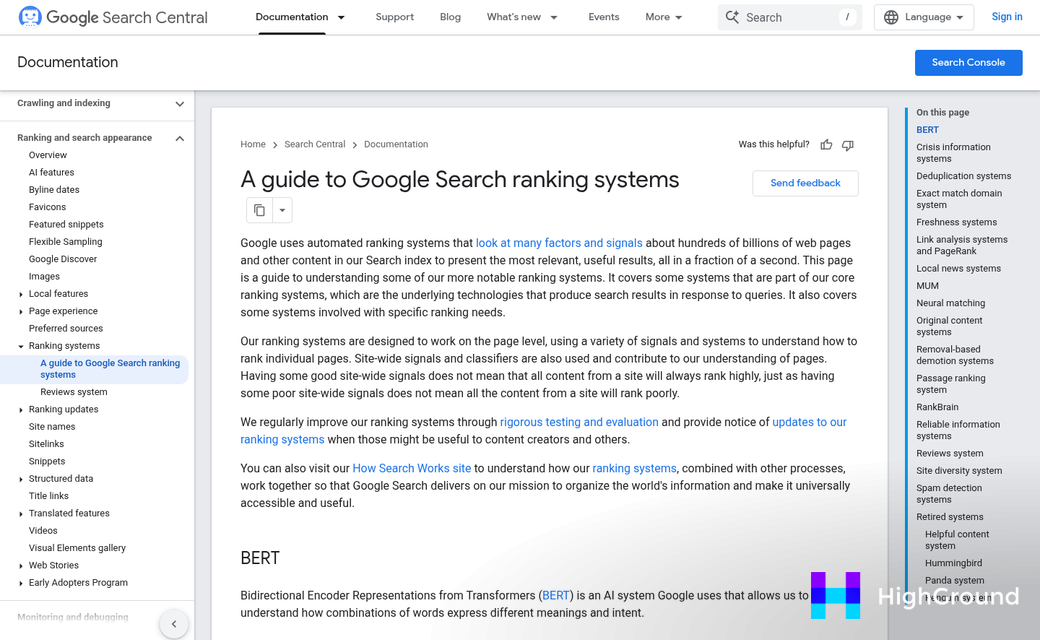
Internal linking plays into this too. When you connect a piece to other relevant content on your site, you help readers go deeper and you show search engines that your site has authority on the subject. Automatic internal linking with AI makes this a natural part of every piece instead of an afterthought.
First-hand perspective is harder to fake and helpful because of it. A piece that includes a real example, a tested strategy, or an opinion grounded in direct experience gives readers something they can't get from a generic summary. That's where human input in your workflow pays off in the output.
Author credibility signals matter too. A named author with a bio, an area of expertise, and a steady publication history can add trust that a nameless page can't replicate. Auto-assigning authors to posts can help search engines connect content to the person behind it.
Quality signals are what protect your content at scale. Where your content came from matters far less compared to what it does for the person reading it.
Audit Your Existing AI Content Before It Becomes a Liability
If you've already published a large volume of AI-generated content, it's worth taking stock of what's actually working before a traffic drop makes that choice for you.
Start by pulling your traffic data and filtering for pages with zero or near-zero organic visits over the last six months. Pages that haven't attracted a single click in that timeframe are worth a second look. They're not automatically dead weight. But they do need a reason to be out there.
From there, look for these patterns across your content.

Check for thin pages that cover a topic in 300 words when the subject legitimately needs more depth. Look for duplicate angles where you've published two or three pieces that answer the same question with slightly different titles. Find posts with no engagement - no clicks, no time on page, no conversions - after a reasonable window. Ask yourself if each piece can add something that your other content doesn't already cover.
Once you've identified the problem pages, you have three options. You can update and expand pieces that have potential but are currently underdeveloped. You can consolidate overlapping posts into one stronger piece and redirect the old URLs. Or you can remove content that has no traffic, no links, and no reason to stay live.
Consolidation is underused and worth the effort. Three weak posts merged into one well-developed piece will perform better than leaving all three to compete with each other.
An audit doesn't have to be exhaustive immediately. Pick the bottom 20% of your content by traffic and work through that first. You'll get a clearer picture of what your AI output actually looks like at scale - and where the gaps are between what got published and what should have been published. Tools that automatically update posts can help you work through underdeveloped content faster once you've identified what needs attention.
Scale Smart, Not Just Fast
You don't need to overhaul everything overnight. Pick one thing this week - run a quick audit on your lowest-performing pages, or add a single human review checkpoint to your publishing workflow. Small process changes compound fast, and this puts you miles ahead of competitors who are still treating AI like a copy-paste machine.
FAQs
Does Google penalize AI-generated content?
Google does not penalize content simply for being AI-generated. It penalizes content that is unhelpful, thin, or repetitive, regardless of how it was produced.
What caused sites to get penalized in March 2024?
Sites penalized in March 2024 published high volumes of AI content with no editorial oversight. The combination of mass output and zero human review, not AI use itself, triggered penalties.
How much AI content do top-ranking pages use?
According to Ahrefs, 86.5% of top-ranking pages contain some AI-generated content, and the correlation between AI content percentage and ranking position is nearly zero.
What is scaled content abuse according to Google?
Google defines scaled content abuse as producing large volumes of content primarily to rank in search rather than to genuinely help readers. It is listed as a named spam category in Google's search documentation.
How should I audit existing AI content on my site?
Filter your traffic data for pages with zero organic visits over six months, then identify thin, duplicate, or low-engagement posts. You can update, consolidate, or remove problem pages depending on their potential.