


So why would anyone go looking for something else? That's a fair question, and the answer is different for everyone. Maybe the pricing structure doesn't fit your workflow. Maybe you need deeper customization than an AI-first tool lends itself to. Maybe you're an agency building dozens of sites a month and you want to see what else the market has to give you before committing. Or maybe you just like learning about your options - which is a perfectly reasonable way to make decisions.
Whatever brought you here, this post is built for people who already have some sense of what ZipWP does and want an honest look at how the alternatives compare. Not a surface-level list of tools with recycled descriptions. But a comparison of what each option actually gets right, where it falls short, and who it's best suited for. If you're trying to figure out if ZipWP is the right fit - or if something else might serve you better - you're in the right place.
Short Summary
Yes, a few alternatives come close to ZipWP for AI-powered WordPress site building. The strongest competitors include 10Web, which offers AI site generation with hosting, Divi AI, which integrates AI directly into a popular page builder, and Elementor AI, which adds AI features to one of WordPress's most-used builders. However, ZipWP stands out for its speed and simplicity in generating complete WordPress sites instantly. No single alternative perfectly replicates its combination of free access, instant demo generation, and seamless SureCart/Starter Templates integration.
What Makes ZipWP Worth Comparing Against
ZipWP built its reputation on one thing: speed. The platform lets you go from a blank screen to a structured WordPress site in around 60 seconds; it's not a loose estimate - it's the core promise the whole tool is built around.
To understand why that matters, you should think about who actually uses a tool like this. A freelancer taking on five client projects a month doesn't want to spend two hours on setup before they've even started on work. A small business owner launching their first site wants something up and running before they lose momentum. ZipWP targets that exact window where motivation is high and technical patience is low.
The speed comes from an AI-driven workflow that takes your inputs - your business name, industry and a few preferences - and generates a site structure for you. It works with page layout, placeholder content and visual styling without you having to touch a single setting manually; it's a significant amount of work to hand off to a tool.
Underneath this sits the Astra theme, which is one of the most widely used WordPress themes available. ZipWP pairs Astra with over 240 predesigned templates, so you get a starting point that already looks finished. Astra is also a lightweight build, which means sites load fast without extra optimisation work on your end.
The templates span a number of industries and use cases, from service businesses to portfolios to landing pages. This matters because a generic template forces you to undo default decisions before the site starts to feel like yours. A well-matched starting template cuts that friction considerably.
When looking at ZipWP alternatives, the honest question to ask is what you're actually trying to replace. Is it the speed? The template library? The AI layer? The fact that it's built on WordPress so your site stays portable and self-hosted? These are separate things, and most competitors do well in one area while falling short in another. If you're evaluating AI-powered writing tools as part of your broader setup, it's also worth reading about Copy.ai alternatives for small business owners to see how the landscape compares.
That's what makes ZipWP a helpful benchmark - it's not the only tool that does fast site creation. But it combines a few elements in a way that sets a helpful standard. Once your site is live, tasks like bulk updating internal links across WordPress become the next practical consideration as your content grows.
The Main Reasons People Look for ZipWP Alternatives
Speed is great. But it's not everything. A lot of users have tried ZipWP and legitimately like how fast it gets them from zero to a working site. Then a few weeks in they hit a wall - not a dramatic one, just the quiet frustration of wanting something the tool was not built for.
Pricing is one of the first things that comes up. Free tiers limit how many sites you can generate or how much you can customize before you hit a paywall. For freelancers taking care of multiple client projects, that piles up fast. Paying for a tool that still feels restrictive is a hard sell.
Design control is another sticking point. The AI does the heavy lifting - which is the whole point - but that same automation can leave users feeling locked into layouts they did not choose. If you have a look in mind for a client, you want to pull the design in that direction without fighting the generator to get there.

Then there's the question of AI output quality. The generated content is a starting point - not a finished product - and that's fine. But some users find the copy too generic or the structure too templated to be helpful past the first draft. If you spend more time rewriting than building, the speed benefit starts to shrink.
Beyond style, some users need tools that go deeper on functionality. Think eCommerce setups with product filtering, membership site logic, or multilingual support from day one. ZipWP is built for speed and simplicity, so advanced functionality tends to live outside its focus area.
Team workflows come up too. Solo users don't mind a streamlined tool. But agencies and small teams need comment threads, role-based access, or revision history baked into the platform. When those features are missing, they start to look elsewhere.
The priority question is worth sitting with for a bit. Fast is the right goal for a landing page or a quick portfolio site. But for a full eCommerce build or a content-heavy niche site, the answer gets more complicated. The type of project changes what "good" looks like in a website builder - and that's what drives people to learn what else is out there.
How the Top ZipWP Alternatives Actually Stack Up
Once you start looking at what else is out there, the differences between tools become pretty telling. Speed, templates, AI features and price all matter - but what matters to you the most is how those things work together for a person who just wants a site up and running fast.
Speed is usually the first thing people care about. ZipWP built its reputation on fast AI-generated sites. But EZsite also claims sub-60-second site launches. That puts them in direct competition on the one thing ZipWP was known for.
Templates are another place where tools separate themselves. A bigger library sounds better on paper. But what you actually want is a template that fits your industry and looks like it was made for it. A library of 500 generic layouts is less helpful than 50 well-designed ones that match business types.
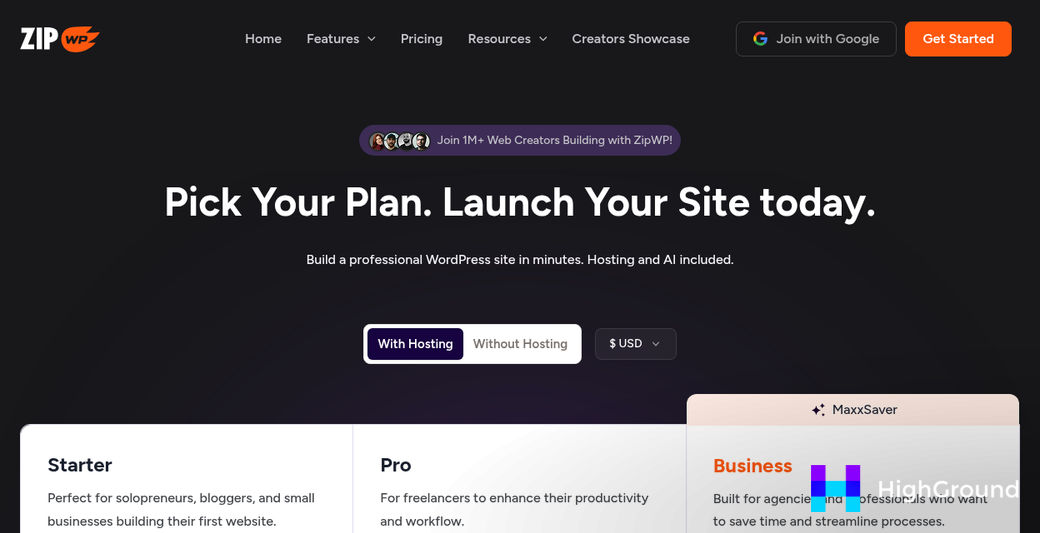
Pricing is where things get interesting. Free plans look attractive. But they tend to limit the features that make AI site builders worth using - it's worth checking what's included at each tier before anything.
On the ratings side, Zarla holds an 85% SaaSWorthy score compared to ZipWP's 82%; it's not a massive gap. But it does line up with what users are saying across platforms. G2 pulls from over 3 million reviews, so patterns in that data tend to reflect real-world experience instead of cherry-picked feedback.
| Tool | AI Site Generation | Templates | Starting Price |
|---|---|---|---|
| ZipWP | Yes | 20+ | Free / $9.99/mo |
| EZsite | Yes | 50+ | Free / $12/mo |
| Zarla | Yes | 100+ | Free / $19/mo |
| Durable | Yes | Limited | $15/mo |
Ease of use is harder to put in a table. But it's what tips the scales. ZipWP leans into the WordPress ecosystem, which is familiar to users but can add a layer of difficulty that pure website builders don't have. If you're already working in WordPress, tools like adding ChatGPT directly to WordPress can extend what you're building without switching platforms. Tools like Durable and Zarla take a more closed, beginner-first strategy that trades flexibility for simplicity.
Where Each Alternative Falls Short
Every tool in this comparison has something going for it. But none of them are without drawbacks. A weakness only matters if it can affect what you actually need it for.
Elementor AI is an example of this. The platform looks polished in demos. But once you're past the first setup, the costs start to add up. You're paying for the base plugin, then might pay for a Pro license, and then for AI credits on top of that. For a freelancer taking care of ten client sites, that billing structure gets expensive fast. A personal blogger running one site might barely notice it.
Divi AI runs into a similar pattern. The interface feels intuitive. But new users hit a wall when they try to move past basic layouts. The learning curve to get custom results is steeper than the marketing suggests. If you're already a Divi user, that's less of a problem. If you're new to it, the onboarding takes longer than expected.
10Web leans heavily on its automation, which is great for speed but limits how much control you have over the final output. The sites it generates look clean. But they can seem generic without manual editing afterward. It's fine for a quick client placeholder. But it's a problem if you're building something that needs to look great from day one.

Dorik is affordable. But it trades depth for simplicity. Advanced users will hit the ceiling on customization fairly quickly. It's also a hosted platform, which means you're tied to their infrastructure in a way that self-hosted WordPress users are not.
Wix ADI is maybe the most limited in terms of scalability. What it builds is fine for a basic web presence. But trying to grow that site over time - adding complex functionality or deeper integrations - gets frustrating. It's a platform that works best inside its boundaries.
The pattern worth noting across these is the difference between the demo experience and the day-to-day reality. Most of these tools are designed to impress on first use, and it's only when you try something slightly outside their intended workflow that the cracks show. Think about where your workflow is most likely to push limits before committing to anything. If SEO matters to your site's growth, it's worth looking at AI-driven meta automation for WordPress as part of your longer-term stack.
Which Type of User Each Alternative Actually Suits
The right tool depends almost entirely on who you are and what you need done. Forget the feature lists for a bit and think about your situation.
If you run a small agency and build sites for clients on a regular basis, a platform with white-label options and team features will serve you much better than a solo-focused builder. You need speed without losing the ability to hand work off cleanly.
Freelancers that work alone and mostly build brochure sites will do well with a lighter tool that gets pages live fast. You probably don't need deep eCommerce functionality or developer-level customization. Keeping things easy is not a compromise - it's the right fit.
Beginners with no coding background should prioritize tools that make decisions for them first. A builder that prompts you with questions and generates a ready-to-edit layout removes friction. You want to get something online without needing a tutorial for every step.
eCommerce sellers have different needs entirely. You want a tool that connects to payment systems, works with product pages cleanly, and does not bolt those features on as an afterthought. Some AI builders treat eCommerce as a secondary feature and it shows.

Developers who want full control over the output will feel limited by most AI-first builders. If you want to generate a base and then get into the code directly, look for tools that export clean HTML or work inside environments you already know. If you use WordPress, features like auto-updating posts and pages with AI can handle a lot of the repetitive work without touching your workflow.
Here is a quick way to map yourself to the right type of tool:
| User Type | What to Prioritize |
|---|---|
| Solo freelancer | Speed, simplicity, low cost |
| Agency owner | Multi-site management, client handoff tools |
| eCommerce seller | Native store features, payment integration |
| Complete beginner | Guided setup, minimal decisions required |
| Developer | Code access, clean exports, flexibility |
The person who just needs something live by Friday and the developer who wants to control every div are not shopping for the same thing. Knowing which one you are makes the whole process quite a bit shorter.
So, Does Anything Actually Come Close to ZipWP?
Before you follow anything, ask yourself one honest question: Am I building sites, or am I building a business that should have a steady stream of content to grow? That single distinction will tell you more about which tool belongs in your workflow than any feature comparison chart ever could.
FAQs
What is ZipWP primarily known for?
ZipWP is known for speed, generating a structured WordPress site in around 60 seconds using an AI-driven workflow that handles layout, content, and styling automatically.
Why do users look for ZipWP alternatives?
Common reasons include restrictive pricing tiers, limited design control, generic AI-generated content, lack of advanced functionality like eCommerce, and missing team collaboration features.
Which ZipWP alternative suits complete beginners best?
Beginners should prioritize tools with guided setups that make decisions for them, generating ready-to-edit layouts without requiring tutorials for every step.
Does any alternative match ZipWP's site generation speed?
EZsite also claims sub-60-second site launches, putting it in direct competition with ZipWP on speed, while also offering a larger template library.
What should eCommerce sellers prioritize in a site builder?
eCommerce sellers need native store features and clean payment integration built into the platform, not bolted on as an afterthought.