


Fixing it manually is tedious. For a site with hundreds or thousands of URLs, that process can take weeks.
This is where AI legitimately earns its place in your workflow. The right AI tools can scan your content at scale, surface cannibalizing pages fast, and even recommend concrete fixes based on the context of each conflict. What used to take an experienced SEO days to untangle can now be done in a fraction of the time - and with more consistency.
I'll walk you through how to use AI to find keyword cannibalization on your site and take action on it, with helpful steps you can apply regardless of your site's size or technical setup.
Short Summary
AI tools can identify keyword cannibalization by crawling your site and flagging pages competing for the same search terms. Upload your URLs and target keywords to an AI tool, which analyzes ranking overlap, content similarity, and search intent conflicts. Once identified, fix cannibalization by consolidating duplicate pages, using canonical tags, merging similar content, redirecting weaker pages to the strongest one, or differentiating content to target distinct intents. AI can also suggest which page to keep as the primary ranking target based on authority and performance data.
What Keyword Cannibalization Actually Does to Your Rankings
When two pages on your site target the same keyword, Google has to choose one to rank. But it does not necessarily pick the right one, and it sometimes splits its attention between them. That means neither page performs as a single, stronger page would.
This matters quite a bit more than it sounds. The difference between ranking first and ranking third is not small. According to February 2023 click-through rate data, the top result on Google earns 25.6% of all clicks, the second earns 10.15%, and the third earns just 6.87%. The first two positions together pull nearly three times the clicks of position three. If cannibalization is holding your best page back from rank one, that gap in traffic is very real.
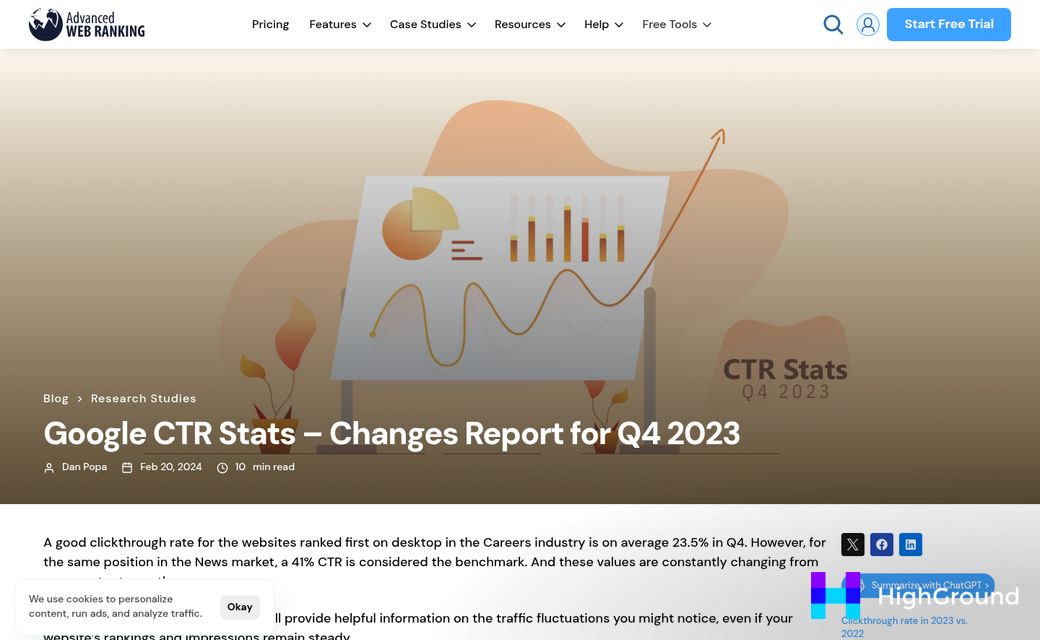
| Google Position | Average CTR |
|---|---|
| Position 1 | 25.6% |
| Position 2 | 10.15% |
| Position 3 | 6.87% |
There is also a link equity problem to consider. Backlinks and internal links that could have been building authority for one strong page get scattered across two weaker ones. Google reads that as two mediocre pages instead of one authoritative source. Neither page gets the full benefit of the links pointing at them.
The end result is a site that works against itself. More content and pages still leave traffic plateaued or dropping. That is a structural problem that gets harder to untangle the longer it goes unaddressed.
Why Traditional SEO Tools Miss Cannibalization Clusters
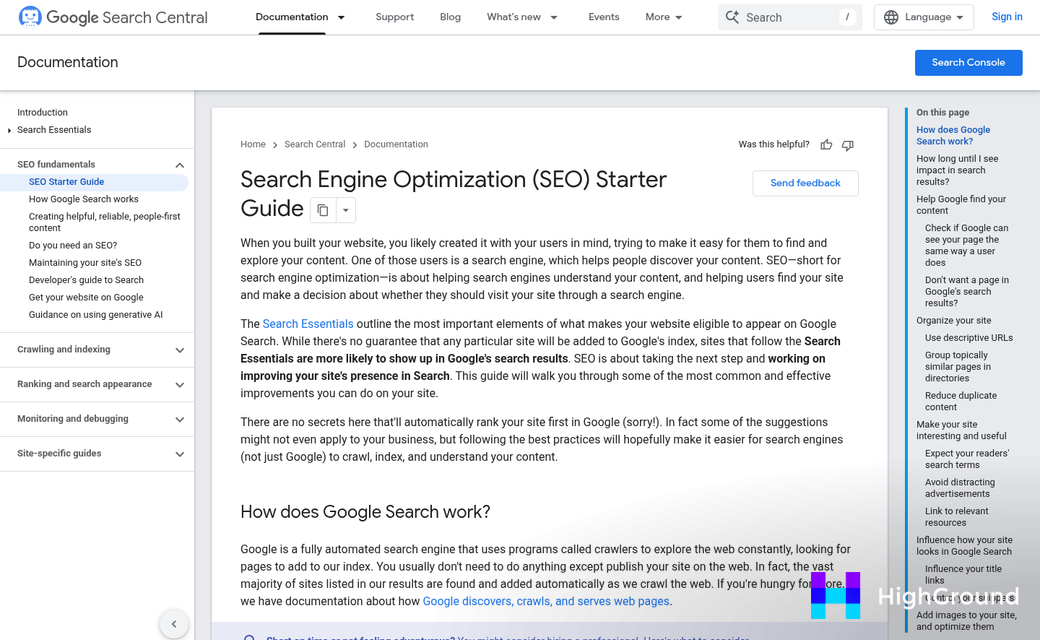
Most SEO tools are built to find what you can already name. Tools like Screaming Frog, rank trackers and keyword-level auditing tools work by matching URLs to the exact keywords you're tracking. If two pages target the same keyword phrase word-for-word, the tool flags it. That part works fine.
But cannibalization doesn't look that clean in real life.
Two pages can compete for the same search intent without sharing a single identical keyword. A page about "running shoes for flat feet" and another about "best sneakers for overpronation" are chasing the same searcher - but a keyword-match tool sees two different topics. The semantic overlap is invisible to it.
This isn't a minor gap. A real-world audit of a 5,000-page e-commerce site found 312 cannibalization clusters that the site's existing tools had missed entirely. Those clusters had been quietly splitting ranking signals and suppressing organic performance without a single flag from the platform the team relied on.
The core limitation comes down to how these tools are designed. Rank trackers monitor performance for terms you've already told them to watch. They don't go looking for connections between pages on their own. Screaming Frog can crawl your site at scale and surface technical data. But it isn't built to interpret meaning or compare how two pages relate to each other from a search intent angle.
So the audit looks clean and the rankings quietly underperform.
Conventional tools also treat each page as a separate object to review. They check metadata, word count, load speed and keyword density in isolation. What they don't do is model the relationships between pages - which is where cannibalization lives. Tools designed for meta automation and AI-driven SEO are starting to close this gap by analyzing pages in context rather than in isolation.
If your tool can only see what's written on the surface, it has no way to detect what's going on at the intent level underneath; it's where a large chunk of cannibalization problems actually sit, waiting to be found by something built to look deeper. Platforms like AI-powered post and page updating tools take a more relational approach, flagging overlap that traditional crawlers simply aren't designed to catch.
How AI Detects Semantic Overlap Between Pages
AI approaches this problem differently from rule-based tools. Instead of matching keywords as text strings, it reads the meaning behind your content and compares pages based on what they are actually about.
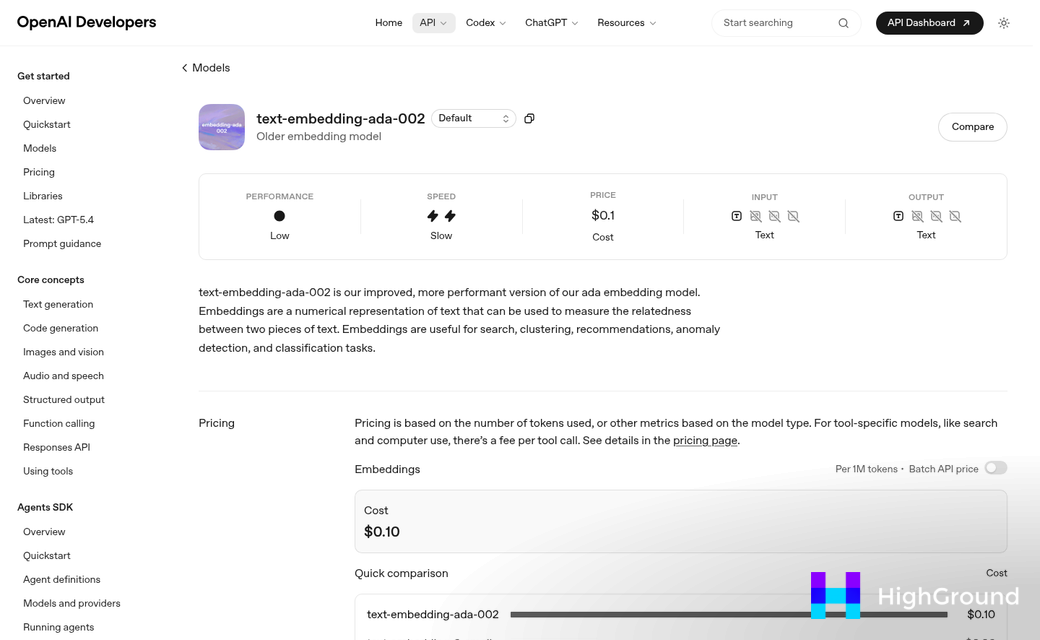
The process starts by converting your page content into something called a vector - a long list of numbers that represents the meaning of a piece of text. Tools built on models like OpenAI's text-embedding-ada-002 do this automatically. Every page on your site gets turned into its own numerical fingerprint that captures the ideas, topics and intent in that content.
Once you have two vectors, you can measure how similar they are using a strategy called cosine similarity - this gives you a score between 0 and 1. A score close to 0 means the pages are about different things. A score close to 1 means they are covering nearly the same ground. You don't need to know the math behind this to use it well.
In practice, a cosine similarity score above 0.9 is a strong signal that two pages are competing with each other. Scores in the 0.75 to 0.9 range can still point to actual overlap and are worth a look.
| Similarity Score Range | What It Likely Means |
|---|---|
| 0.90 - 1.00 | High chance of cannibalization |
| 0.75 - 0.89 | Possible overlap, worth reviewing |
| Below 0.75 | Pages are likely distinct enough |
What makes this helpful is the scale. Running these comparisons manually across hundreds of pages would take days. An AI-powered process can do it across your entire site and surface every suspicious pair in one pass. If you find pages that need to be consolidated or updated, tools that let you find and replace text across all WordPress posts at once can make that cleanup much faster.
Running an AI Cannibalization Audit Step by Step
You don't need to be a developer to run this audit. The process is sequential and each step builds on the last.
Start by pulling a full list of your URLs. You can export these from Google Search Console, your sitemap, or a crawl tool like Screaming Frog. You want to have every page in one place before doing anything else.
Next, feed the content from those pages into an AI embedding model. Tools like OpenAI's API, Cohere, or platforms built on top of these models can take your page text and convert it into numerical representations that capture meaning. You don't need to know the math behind it - just know that two pages covering the same territory will produce numbers that sit close together.
Once the model processes your content, it generates similarity scores between page pairs. A score close to 1.0 means the pages are very similar in meaning, and a score closer to 0 means they're not. From there, the tool groups pages with high scores into clusters - those are your flagged candidates for cannibalization.
Here is what a sample output might look like.
| Page A | Page B | Similarity Score | Suggested Action |
|---|---|---|---|
| /seo-tips | /seo-best-practices | 0.94 | Consolidate |
| /content-marketing-guide | /content-strategy-101 | 0.88 | Differentiate or merge |
| /link-building | /backlink-strategies | 0.76 | Review and differentiate |
| /email-marketing | /social-media-ads | 0.41 | No action needed |
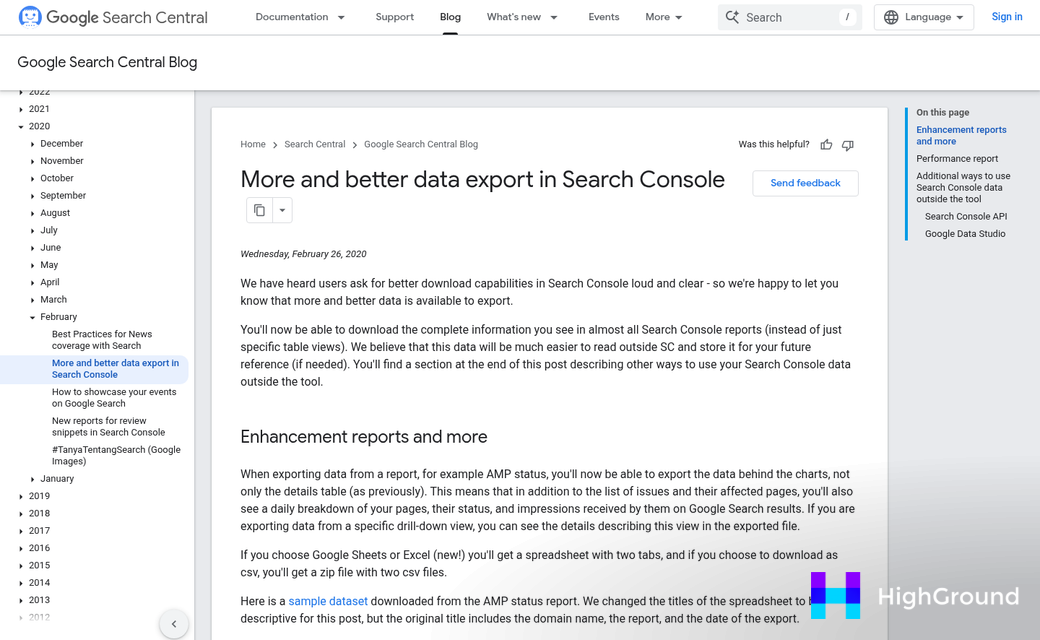
Most AI audit tools will let you set a threshold - just to give you an example, flag anything above 0.80 - so you're not looking over hundreds of low-danger pairs manually. Start with a tighter threshold to catch the most obvious overlaps first. If you're managing a large WordPress site, bulk editing plugins can help you act on these findings at scale.
Once you have your clusters, the next step is to choose what to do with each one.
Consolidating, Redirecting, or Differentiating Cannibalizing Pages
Once AI flags your cannibalizing pages, you have three paths forward. The right move can depend on what the pages are actually doing.
Merging works best when two pages cover so much the same ground that keeping both alive just splits your authority. You take the best content from each, build one page, and set up a 301 redirect from the old URL to the new one. That redirect tells search engines to pass the link equity from the removed page to the one that stays.
The results can be dramatic. Backlinko consolidated two cannibalizing articles with a 301 redirect and saw a 466% increase in clicks year over year. That jump comes from concentrating authority in one location instead of spreading it thin.

Differentiation is the right call when the pages legitimately serve different audiences or answer different questions. If one page targets beginners and another targets advanced users, you don't need to merge them - you'll have to make the distinction between them more obvious to search engines. Tools that auto-write blog posts with AI can help you quickly rewrite pages to target distinct angles.
| Approach | When to Use It | What to Do |
|---|---|---|
| Consolidate | High content overlap, similar traffic levels | Merge both pages into one and redirect the old URL |
| Redirect | One page clearly outperforms the other | 301 redirect the weaker page to the stronger one |
| Differentiate | Different intent but too much keyword overlap | Rewrite each page to target a distinct angle or audience |
A quick look at traffic and intent overlap usually makes the choice easy. High overlap with similar traffic means consolidate. A winner in the pair means redirect.
Keeping Cannibalization From Creeping Back In
Fixing everything now only to have the same problem show up again in six months is a danger for any growing site, and it happens more than you'd expect. New content gets added, old pages get forgotten, and before long you're back where you started.
The good news is that you don't need a complex system to stay on top of this. An easy keyword map is a great place to start - a living document that assigns a target keyword to each page on your site, so you always know which page is meant to rank for what.
Before you publish anything new, run it through an AI similarity check against your existing content. Tools like Surfer, Clearscope, or a custom ChatGPT prompt can compare your draft to live pages and flag possible overlap. That one extra step takes a few minutes and can save you from creating a problem you'll have to untangle later.
For busy site owners, this lightweight pre-publish check is more practical than a manual review of every page on a growing site. AI makes it possible to keep an eye on things without blocking your whole workflow.
Beyond the pre-publish step, a quick re-audit every few months is worth doing. You don't have to go as deep as the first audit - just a fresh crawl and a pass through your keyword map to see if anything has drifted. Sites change faster than you realize, and a periodic check keeps small problems from becoming large ones.
Building these habits early is much easier than a full cleanup every year. A keyword map, a pre-publish similarity check, and an occasional re-audit together create a simple schedule that any site owner can follow. You want to make prevention feel like a normal part of publishing - not an extra burden on top of everything else you already manage.
Your Site Deserves to Stop Competing With Itself
The good news is that you don't need to overhaul your entire content library overnight. Start with your ten or twenty highest-traffic pages, run them through an AI-assisted audit, and look for the patterns. More often than not, the fixes are easy - a redirect here, a consolidated post there, a clearer content hierarchy that gives search engines no reason to second-guess which page you want to rank. Small, deliberate moves compound faster when your site's structure finally starts working with you instead of against you.
FAQs
What is keyword cannibalization and why does it matter?
Keyword cannibalization occurs when two pages on your site target the same keyword, forcing Google to choose between them. This splits ranking signals and link equity, preventing either page from reaching its full potential in search rankings.
Why do traditional SEO tools miss keyword cannibalization?
Traditional tools match exact keyword strings but can't detect semantic overlap between pages targeting the same search intent with different wording. They also analyze pages in isolation rather than modeling relationships between them.
How does AI detect cannibalization between pages?
AI converts page content into numerical vectors representing meaning, then measures similarity using cosine similarity scores. A score above 0.9 strongly indicates cannibalization, while scores between 0.75 and 0.9 suggest possible overlap worth reviewing.
What are the three ways to fix cannibalizing pages?
You can consolidate two heavily overlapping pages into one with a 301 redirect, redirect the weaker page to a stronger performer, or differentiate pages by rewriting them to target distinct audiences or angles.
How can I prevent keyword cannibalization from returning?
Maintain a keyword map assigning target keywords to each page, run AI similarity checks before publishing new content, and perform a quick re-audit every few months to catch any newly created overlap early.